Inside the World of Sports Medicine Physicians: A Journey of Healing and Performance
As an orthopedic surgeon specializing in sports medicine, I have the privilege of working with athletes and individuals passionate about staying active, healthy, and excelling in their chosen sports. The world of sports medicine is a dynamic and rewarding field that combines orthopedic expertise with a deep understanding of athletic performance and injury management.
The Role of a Sports Medicine Physician:
Sports medicine physicians are dedicated to diagnosing, treating, and preventing injuries related to physical activity, sports, and exercise. Our focus extends beyond professional athletes to encompass individuals of all ages and fitness levels, helping them achieve their performance goals and recover from injuries.
Injury Prevention and Performance Enhancement:
One of the most fulfilling aspects of being a sports medicine physician is aiding athletes in preventing injuries and optimizing their performance. We work closely with athletes to develop tailored training programs, provide guidance on proper biomechanics and technique, and implement injury prevention strategies to minimize the risk of sports-related injuries.
Comprehensive Diagnosis and Treatment:
In the realm of sports medicine, we encounter a diverse range of musculoskeletal injuries, from sprains, strains, and fractures to more complex conditions such as ligament tears and joint disorders. Utilizing our expertise in orthopedics and sports science, we employ advanced diagnostic techniques and personalized treatment plans to help athletes recover and return to their sports safely.
Team Collaboration and Multidisciplinary Approach:
Sports medicine physicians often work alongside physical therapists, athletic trainers, nutritionists, and other healthcare professionals to provide comprehensive care. Collaboration among various specialties ensures a holistic approach to injury management, rehabilitation, and optimizing athletic performance.
Patient-Centered Care and Community Engagement:
Being a sports medicine physician isn’t solely about treating injuries. It’s about fostering relationships with athletes, understanding their aspirations, and supporting them through their journeys. Whether it’s a professional athlete or a weekend warrior, each individual’s goals are valued, and personalized care is provided to aid in their recovery and return to activity.
Continuous Learning and Advancements in Sports Medicine:
The field of sports medicine is constantly evolving, with ongoing research, technological advancements, and innovative treatments. Continuous learning and staying abreast of the latest developments are crucial to providing athletes with the most effective and cutting-edge care available.
Being a sports medicine physician is an inspiring and fulfilling experience. It’s about more than treating injuries; it’s about empowering athletes to overcome challenges, optimize their performance, and return to doing what they love. The opportunity to make a positive impact on individuals’ lives through injury prevention, rehabilitation, and support in achieving their athletic goals is what makes the journey in sports medicine incredibly rewarding.
Orthopaedic Tips for Busy Moms
Orthopaedic Tips for Busy Moms
Moms spend a lot of time taking care of everyone else, often pushing through aches and pains along the way. From carrying children and standing for long hours to balancing work, activities, and busy schedules, the physical demands can add up quickly.
Some of the most common issues we see include:
Back Pain from Lifting Children
Repeated lifting, carrying car seats, and bending over can place added stress on the lower back.
Helpful tips:
- Bend at your knees, not your waist
- Hold children close to your body when lifting
- Avoid twisting while carrying
Knee Pain
Whether it’s walking sidelines, climbing stairs, or staying active with family activities, knees take on a lot of daily stress.
Helpful tips:
- Wear supportive shoes
- Stretch regularly
- Stay active with low-impact movement when possible
Foot Pain from Standing All Day
Long hours on your feet can lead to soreness and fatigue in the feet and ankles.
Helpful tips:
- Choose supportive footwear
- Avoid worn-out shoes
- Take seated breaks when possible
Wrist Pain or “Mom Wrist”
Repetitive lifting and carrying can sometimes cause wrist and thumb discomfort.
Helpful tips:
- Alternate sides when carrying children or bags
- Take breaks from repetitive motions
- Stretch wrists and hands throughout the day
While occasional soreness can happen, persistent pain should not be ignored. Taking care of yourself is just as important as taking care of those around you.
This Mother’s Day, Tri-State Orthopaedics celebrates all the moms who keep their families and communities moving every day.
New Seasons, New Activities, New Pains
What Seasonal Sports Mean for Your Body
By Dr. Tyler Kelly, DPM, FACFAS
As the seasons change, so do our hobbies, exercise routines, and weekend adventures.
Whether it’s strapping on skis in the winter, lacing up running shoes in the spring, or
hitting the water in the summer, each new season brings a fresh wave of physical
activity—and often, a fresh set of aches and pains to go along with it.
As a podiatrist and foot and ankle surgeon, I see this pattern every year in my clinic.
Patients come in excited about their new seasonal sport, only to find themselves
sidelined by pain within the first few weeks. The good news? Most of these injuries are
preventable with the right preparation and awareness.
My Own Experience: Wakesurfing Season is Back
I’ll be the first to admit that I’m not immune to the seasonal sports cycle myself. Every
spring, as the weather warms up, I dust off my board and get back on the water for
wakesurfing. There’s nothing quite like gliding behind the boat on a warm afternoon—
it’s one of my favorite parts of summer.
Getting back on the water — wakesurfing season!
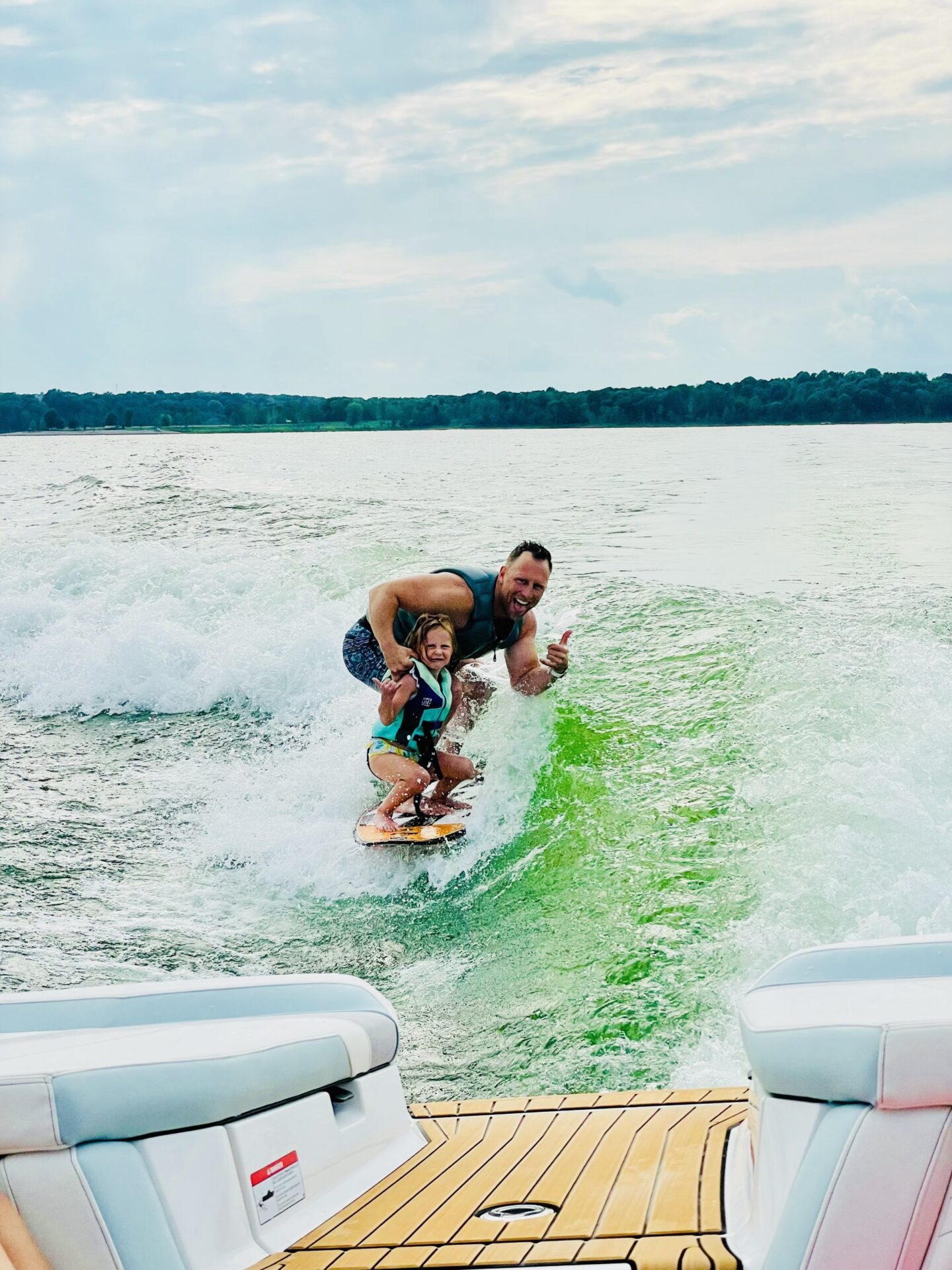
But even I have to practice what I preach. Every early season, I notice the familiar
tightness and soreness that comes from jumping back into an activity my body hasn’t
done in months. And sure enough, early season shin splints have become something of
an annual tradition for me.
Wakesurfing demands balance, core stability, and leg strength that most of us let lapse
during the off-season. The repetitive loading on the lower legs—especially while
balancing and adjusting on the board—creates the perfect storm for shin splints in those
first few weeks back on the water.
Understanding Shin Splints (Medial Tibial Stress Syndrome)
Shin splints—clinically known as medial tibial stress syndrome (MTSS)—refer to pain
along the inner edge of the tibia, the large bone in the front of your lower leg. They
typically develop when the muscles, tendons, and bone tissue become overworked due
to a rapid increase in physical activity.
Common symptoms include:
• A dull, aching pain along the inner shin
• Tenderness or soreness along the tibia
• Mild swelling in the lower leg
• Pain that worsens during and after exercise
Common Seasonal Injuries: What You Need to Know
Not all pain is created equal. Understanding the type of injury you’re dealing with is
critical to getting the right treatment—and avoiding making it worse. Here are the four
most common categories I treat in my patients at the start of a new season:
1. Muscle Strains & Tears
A muscle strain occurs when muscle fibers are overstretched or partially torn due to
sudden exertion or repetitive overuse. In the foot and ankle, the calf complex
(gastrocnemius and soleus), the peroneal muscles along the outer ankle, and the
intrinsic muscles of the foot are especially vulnerable at the start of a new season.
What it feels like:
• A sudden sharp “pop” or pulling sensation during activity
• Localized pain, swelling, and bruising
• Weakness or difficulty bearing weight
• Pain with stretching or contracting the affected muscle
2. Stress Fractures
Stress fractures are tiny cracks in bone caused by repetitive force—not a single traumatic
event. They are one of the most commonly misdiagnosed injuries because they often
start as a dull, diffuse ache that athletes mistakenly attribute to general soreness. In the
foot, the metatarsals (the long bones leading to your toes) are the most frequently
affected. The navicular and calcaneus (heel bone) are also high-risk sites.
Warning signs:
• Pain that begins during activity and worsens progressively over days to weeks
• Point tenderness directly over a bone
• Swelling on the top of the foot or around the ankle
• Pain that improves with rest but returns immediately upon resuming activity
3. Muscle Tightness & Overuse Syndrome
Muscle tightness is often dismissed as just “soreness,” but chronic tightness in the lower
leg and foot can be the root cause of a cascade of more serious problems. When muscles
are tight, they alter biomechanics—changing the way load is distributed across your foot
and ankle—setting the stage for tendinopathy, plantar fasciitis, and stress fractures.
Common areas of tightness in seasonal athletes:
• Gastrocnemius & soleus (calf): tight calves increase stress on the Achilles tendon
and plantar fascia
• Peroneals (outer ankle): tightness here can limit ankle mobility and increase the
risk of ankle sprains
• Plantar fascia: tightness in the arch is the hallmark of plantar fasciitis, one of the
most common foot complaints I see each spring
• Tibialis anterior (front of shin): often the culprit in shin splint-type pain
4. Ligament Injuries (Sprains & Instability)
Ligaments are the tough, fibrous bands that connect bone to bone and provide joint
stability. The ankle is one of the most commonly sprained joints in the body, and lateral
ankle sprains—involving the anterior talofibular ligament (ATFL) and calcaneofibular
ligament (CFL).
Why Seasonal Transitions Lead to Injury
The human body is remarkably adaptable—but it needs time to adapt. When we
transition from one season to the next and jump headfirst into a new sport or activity,
we’re essentially asking our muscles, joints, tendons, and bones to do things they
haven’t been asked to do in months.
New Seasons, New Activities, New Pains
The best way to avoid early-season injuries is preparation. Here are the strategies I
recommend to my patients—and try to follow myself:
1. Ease In Gradually
Don’t expect your body to pick up where it left off six months ago. Reduce your intensity
and duration by 30–50% in the first two weeks and build up from there. For water
sports, that might mean shorter sessions and focusing on technique before pushing
endurance.
2. Sport-Specific Strengthening
Identify the key muscle groups your seasonal sport demands and begin conditioning
them 4–6 weeks before the season starts. For wakesurfing and board sports, that means
core stability, hip strength, and calf/ankle conditioning.
3. Warm Up Properly
Dynamic warm-ups—leg swings, hip circles, ankle circles, and light cardio—prepare
your joints and muscles for activity far better than static stretching does. Save deep
static stretching for after your session.
4. Listen to Your Body
Pain is your body’s warning system. Early-season discomfort is normal, but sharp pain,
swelling, or pain that persists at rest is a signal to stop and seek evaluation. Pushing
through warning signs is the most common way a minor issue becomes a season-ending
injury.
When to See a Podiatrist
As a podiatrist specializing in foot and ankle surgery, I treat everything from shin splints
and stress fractures to tendon injuries and ankle instability. Many of the patients I see in
my surgical practice could have avoided the operating room entirely with earlier
intervention and proper management.
New season, new adventures—just make sure your feet and ankles are along for the
ride. Stay active, stay smart, and don’t wait until a minor ache becomes a major
problem. Your foundation matters more than you think.
Dr. Tyler Kelly, DPM, FACFAS
Podiatry & Foot and Ankle Surgery | Tri-State Orthopaedics | Evansville, IN 47715 | 812-477-1558 |
Path to Becoming an Orthopedic Surgeon: Training and Expertise
Orthopedic surgeons are specialists dedicated to diagnosing, treating, and preventing musculoskeletal conditions, including bones, joints, ligaments, tendons, and muscles. The journey to becoming an orthopedic surgeon is a rigorous and rewarding process that involves extensive education, training, and expertise. As an orthopedic surgeon, I’m here to shed light on the path aspiring professionals undertake to join this specialized field.
Education and Pre-Medical Training:
The path to becoming an orthopedic surgeon typically begins with a bachelor’s degree from an accredited university. Prospective orthopedic surgeons commonly major in a science-related field, although any undergraduate major is acceptable as long as prerequisite coursework in sciences and mathematics is completed.
Medical School:
After completing a bachelor’s degree, aspiring orthopedic surgeons undergo four years of medical school. Medical school involves comprehensive training in:
- Basic medical sciences
- Clinical skills
- Rotations through various medical specialties
During this time, students gain foundatioanl knowledge in:
- Anatomy
- Physiology
- Pathology
- Pharmacology
- Patient care
Residency in Orthopedic Surgery:
Following medical school, aspiring orthopedic surgeons enter a residency program specializing in orthopedic surgery. Orthopedic surgery residencies typically last five years, during which residents receive intensive training in all aspects of orthopedic care, including:
- Trauma
- Sports medicine
- Joint replacement
- Spine surgery
- Pediatric orthopedics
Fellowship (Optional):
After completing residency, some orthopedic surgeons pursue additional training through fellowships to further specialize in specific areas of orthopedic surgery, such as sports medicine, hand surgery, spine surgery, or joint reconstruction. Fellowships provide concentrated expertise in a particular subspecialty, often lasting one to two years.
Board Certification and Licensure:
Upon completion of residency, orthopedic surgeons are eligible to take the board certification examination administered by the American Board of Orthopedic Surgery (ABOS) or other relevant certifying bodies. Board certification demonstrates a surgeon’s expertise and commitment to maintaining high standards of patient care. Additionally, obtaining a state medical license is required to practice medicine in the United States.
Continuing Medical Education (CME):
Orthopedic surgeons continue their education throughout their careers by participating in ongoing medical education and training programs. This ensures they stay updated on the latest advancements, surgical techniques, and evidence-based practices in orthopedic surgery.
Becoming an orthopedic surgeon requires dedication, extensive education, and rigorous training. The journey involves a solid foundation in sciences, followed by medical school, residency, optional fellowship, board certification, licensure, and commitment to continuous learning. This comprehensive training equips orthopedic surgeons with the skills and expertise needed to provide exemplary musculoskeletal care.
Youth Fall Sports Footwear Guide: Expert Tips from Dr. Kelly

Youth Fall Sports Footwear Guide: A Parent’s Guide
By Dr. Tyler Kelly, DPM – Foot & Ankle Surgeon
Fall sports season is here, and for many young athletes, that means new practices, new teams, and new shoes or cleats. The right footwear isn’t just about style or performance; it’s about preventing injuries and keeping your child active and healthy all season long.
As a foot and ankle specialist, I treat many young athletes with overuse injuries, sprains, and foot pain that could have been prevented with the right shoe choice. Let’s break down what to look for in footwear for some of the most popular fall sports.
Football
Key Needs: Stability, traction on grass or turf
Cleat Style: Choose a football-specific cleat, not a soccer cleat. Football cleats usually have a thicker sole, a supportive midfoot, and the option for mid- or high-top designs for added ankle support.
Fit Tip: Make sure there’s less than a thumb’s width of space from the longest toe to the end of the cleat. Too tight and you risk blisters and nail issues; too loose and you risk instability.
Avoid: Hand-me-downs. Cleats mold to the previous wearer’s foot, which can lead to uneven pressure points.
Women’s Soccer
Key Needs: Lightweight feel, firm traction, ankle mobility
Cleat Style: Soccer cleats are low-cut to allow quick direction changes. For fall play, molded cleats work best for firm grass; turf shoes may be needed for artificial surfaces.
Fit Tip: The shoe should hug the midfoot but not pinch the toes. Pay attention to heel slippage, it can cause blisters quickly.
Extra Advice: For athletes with a history of ankle sprains, an ankle brace inside the shoe can provide extra support without affecting ball control.
Cross Country
Key Needs: Cushioning, shock absorption, lightweight build
Shoe Style: Look for a running shoe designed for long-distance training, not a generic “sneaker.” A softer midsole helps absorb repeated impact, while a breathable upper keeps feet cool.
Fit Tip: Shop for shoes at the end of the day when feet are slightly swollen; this ensures the shoe fits during peak activity.
Injury Prevention: Rotate between two pairs during the season to reduce overuse strain and allow the foam to recover between runs.
Women’s Golf
Key Needs: Lateral stability, all-day comfort, weather resistance
Shoe Style: Golf shoes should have a firm sole for balance during swings, with either soft spikes or spikeless traction depending on course rules.
Fit Tip: Comfort is crucial. Your golfer will be walking several miles over 18 holes. Try them on with the same socks worn on the course.
Bonus: Waterproof shoes help keep feet dry during morning dew or wet conditions, reducing the risk of blisters.
General Footwear Tips for All Sports
- Replace worn shoes. Cleats and shoes lose support after a season of heavy use. Plan to replace them at least once a year.
- Check the insole. A simple insole upgrade can improve comfort and support for growing feet.
- Mind the surfaces. Match footwear to the playing surface, grass, turf, track, or trail, to reduce slips and strain.
- Watch for warning signs. Pain, swelling, or changes in gait are signals to rest and possibly see a specialist.
Final Thoughts
The right shoe or cleat isn’t just about better performance. It’s about protecting young athletes from injury and keeping them on the field, course, or trail.
The Hidden Dangers of Ignoring Foot Pain in Young Athletes
Young athletes are tough — sometimes too tough for their own good. Many push through pain to avoid letting down their team or missing a game. Unfortunately, ignoring foot and ankle pain can lead to more serious injuries and longer recovery times.
Why Foot Pain Should Never Be Ignored
Children and teens are still growing, and their bones, muscles, and tendons are developing. Injuries during this time can affect growth plates, leading to long-term problems if left untreated.
Common Foot Conditions in Young Athletes
- Sever’s Disease: Inflammation of the growth plate in the heel, common in ages 8–14
- Plantar Fasciitis: Heel pain from repeated strain on the arch
- Stress Fractures: Tiny cracks in bones from repetitive impact
- Turf Toe: Big toe joint injury from forceful bending
Signs Parents and Coaches Should Watch For
- Limping or avoiding putting weight on one foot
- Consistently removing shoes during games or practice
- Swelling, redness, or bruising
- Complaints of pain that improve with rest but return with activity
The Role of Early Treatment
Prompt evaluation by a podiatrist ensures the injury is properly diagnosed and treated. In many cases, early care means rest and physical therapy, not surgery.
Helping young athletes stay healthy means knowing when to rest and when to seek help.
How to Choose the Right Shoes for Back-to-School Season
Backpacks? Check. Pencils and notebooks? Check. But before your child heads back to class, don’t overlook one of the most important items for a successful school year: a good pair of shoes.
The right shoes support your child’s feet, posture, and overall comfort throughout the day and with kids spending hours walking hallways, standing in lines, and playing at recess, proper footwear isn’t just about style. It’s about keeping their growing bodies safe and supported.
Here are five tips to help you choose the best back-to-school shoes:
1. Prioritize Fit Over Fashion
Shoes that are too big can cause tripping. Shoes that are too tight can lead to blisters or long-term issues like ingrown toenails. Look for shoes that leave about a thumb’s width of space at the toe and that feel snug (but not tight) around the heel. Kids’ feet grow fast, so double-check sizing even if they just got new shoes a few months ago.
2. Look for Support
Shoes should have a firm heel counter (the back part that wraps around the heel), a cushioned insole, and good arch support. These features help with shock absorption and keep the foot aligned important for preventing foot and back pain as your child grows.
3. Avoid Flat, Flimsy Soles
Flexible soles are great for younger kids but avoid shoes that bend too easily in the middle. You want them to flex at the ball of the foot, not the arch. Cheap, thin soles can wear down quickly and provide little protection or support.
4. Choose Breathable Materials
Look for shoes made of leather, mesh, or other breathable fabrics. These materials help reduce moisture buildup, which can lead to blisters, athlete’s foot, or just plain stinky shoes. Breathability is key, especially during active school days.
5. Test Them Out First
Have your child try both shoes on and walk around the store. Watch how they move. Are they dragging their feet or slipping at the heel? Are they excited to wear them? (That’s a good sign they’ll actually want to keep them on.)
The Bottom Line
Shoes play a bigger role in your child’s comfort and health than you might think. A few extra minutes spent finding the right pair can go a long way in preventing foot pain, poor posture, and even back issues later on.
If your child complains about foot, knee, or back pain after the school day, it could be time for a shoe check, or a visit to one of our specialists to make sure everything is growing and moving as it should.
Click here to request an appointment.
Happy back-to-school season!
Why Minimally Invasive Bunion Surgery Might Be Right for You
Why Minimally Invasive Bunion Surgery Might Be Right for You
By Dr. Tyler Kelly, DPM – Foot & Ankle Surgeon
Are you tired of living with bunion pain? You’re not alone, and there’s a better way forward. Thanks to advancements in foot and ankle surgery, we can now treat bunions using Minimally Invasive Surgery (MIS) techniques that offer less pain, smaller scars, and a much faster recovery than traditional open surgery. At my practice, I specialize in these state-of-the-art procedures and would love to help you understand if it’s the right option for you. Here’s what you need to know and why it’s worth coming into the office for a consultation.
What Is Minimally Invasive Bunion Surgery?
Minimally Invasive Surgery for bunions involves correcting the misaligned bones in your foot through tiny incisions, typically just a few millimeters in length. Using advanced instruments and live imaging, I can perform the realignment without cutting through large amounts of soft tissue. Compared to traditional bunion surgery, MIS offers minimal scarring, reduced pain and swelling, faster healing, and same-day walking in most cases.
Top Benefits of MIS Bunion Surgery
Faster Recovery Time – Most patients can walk immediately after surgery in a protective boot and return to regular shoes within weeks.
Less Postoperative Pain – Because the soft tissues are spared, less trauma means less pain, often with minimal need for prescription pain medication.
Better Cosmetic Outcome – Smaller incisions lead to tiny, nearly invisible scars, so you can confidently wear sandals or go barefoot.
Proven Success – Modern MIS techniques are clinically effective, providing excellent alignment correction and long-term relief when performed by a qualified foot and ankle surgeon.
Why an In-Office Consultation Matters
Every foot and every bunion is different. That’s why I always recommend an in-person consultation. During your visit, I will perform a full physical exam and foot X-rays, review your symptoms and medical history, discuss your lifestyle, activity level, and treatment goals, and help you determine if MIS surgery is right for you or if you may benefit from non-surgical care. This one-on-one time allows us to make the best plan tailored to your needs.
Take the First Step Toward Pain-Free Feet
If you’ve been putting off treatment because of fear of surgery or long recovery times, now is the time to reconsider. Minimally Invasive Bunion Surgery is changing lives, and it could change yours.
Electronic Forms FAQ
Health IPass FAQ
- My page is not loading, or it won’t let me log in when entering my date of birth. What do I do?
If your page is not loading or it is not accepting the date of birth you are entering, please use the following tips to help resolve your issue:
- Verify that your phone is connected to a working internet connection by making sure your device is connected properly to Wi-Fi or you have appropriate cellular data signal.
- Verify that you are entering your date of birth in the correct format (example: if your date of birth is January 1st, 1990, you will enter this as 01/01/1990).
- Verify that you have only one check-in window/tab opened on your device. If you have the check-in site opened in multiple windows/tabs, this will cause the site to not load correctly.
If you are still having issues with the page not loading correctly, please try refreshing your webpage or closing out your window and reopening the page from the link you received in your text message. You will not lose the information you have already entered on previous screens if you refresh/reopen your check-in page.
- How do I continue to the next page of the check-in?
Depending on the device you are using, you may have to scroll down on you screen to find the arrow to continue to the next step. This arrow will be located at the bottom right corner of each page that you will tap to get to the next step of your check-in.

- Why will it not let me continue after updating my contact information?
If you are on the “Update Your Contact Information” page and it will not let you click the next line or if it will not let you click the “I’m done, next step” button, make sure that you have clicked the checkmark next to the line that you were previously making changes to.

- Why am I getting a warning pop-up and what do I do?
You may get a warning popup during your check-in stating that you have not added certain information to the Demographic page or that you still need to verify your Insurance name and member ID. If you do not have this information, if the information does not apply to you, or if it is not able to verify the insurance information you have entered, please click the “Continue Anyway” button to continue to the next step of your check-in.
Please Note: Our system cannot automatically verify EVERY insurance policy. Our office will contact you prior to your appointment if we need additional information about the insurance policy you have entered.

- What if I do not have my photo ID or Insurance Cards with me when I am checking in?
If you do not have a copy of your insurance cards with you when you are completing your online check-in, you can still continue to the next step without taking a picture by clicking the “Continue Anyway” button. Please make sure to bring these cards to your scheduled appointment so that we can get a copy at that time.
- I am a returning patient, why am I being asked to fill these forms out again?
All forms must be completed in order to complete your check-in prior to seeing your provider. If you have not finished all the forms and are trying to complete your check-in, please click the “Go back and finish” button to complete the necessary forms.
Please Note: In order to provide an excellent patient experience, information about any changes to your medical history, current treatment progress, or changes to contact information may need to be periodically updated with our office through these forms.

- Why can’t I submit my form?
If you are trying to complete a form by clicking “Submit”, and it will not let you submit it, this means that there is a required section of the form that was not completed. Please refer to the red box that appears at the bottom of your form to see which section was missed. The box for the missed section will also turn red on your form.

- What if there is a required field on the form that does not apply to me?
If there is a field that is required on a form that does not apply to you, and it will not let you submit the form without filling this out, simply type “None” or “N/A” into that line of the form.

- How do I sign or initial my forms?
To sign or initial your forms, simply use your finger to sign directly on your screen.
- What do I do if I do not know the exact information needed for my forms? (Ex: exact date of a previous procedure, updated height/weight)
If you do not know the exact information for the questions being asked, please complete these to the best of your knowledge.
For example, if you do not know the exact date of a previous procedure, you can just fill in the year. Or if you do not know your exact height/weight, you can put an approximate answer.
Our clinical staff will inform you if we need any further details from you when they review your completed forms.
Most Common Injuries During Inclement Weather: What You Need to Know
As inclement weather approaches in the Tri-State area, it’s important to stay informed about the risks of falling and how to prevent injuries. We sat down with Dr. Perry to discuss common injuries, safety measures, and advice for those with mobility challenges.

Common Injuries During Inclement Weather
Inclement weather injuries are common during the winter months, often caused by slippery surfaces and falls. Some of the most frequent injuries include:
What are the best safety measures Tri-State residents can take during inclement weather?
If you don’t have to go outside, don’t go outside. If you do have to go outside, ask for assistance preparing surfaces, and stay off of any slopes. Try and stay on flat surfaces and be aware of stairs. Decks are slick because the cold air comes in on the top and from up underneath. If you are already at risk for falling, try not to get outside if you can help it
Who are the people most at risk for falls?
If you use any kind of assisted device to walk—cane, a walker, or crutches—or if you have balance trouble, trouble seeing or issues with your eyesight, those are all substantial risk factors for falling.
What advice would you give to someone who lives alone and struggles with mobility during inclement weather?
Try and get some support to help you: family members, neighbors, friends, or someone from church to bring you what you need until the weather improves.
How can someone distinguish between an injury that can be treated at home versus one that requires immediate medical attention?
- Pain and swelling after a fall: It can be hard to tell a break from a sprain, but it is safer to have it X-rayed, so we know the difference.
- Some injuries can be obvious: If there’s deformity, there’s pain that there is going to be no way you can control it at home. Those are things that need to be seen. If you can’t move your arm or walk, those need to be seen.
- When in doubt, check it out. Call our office to schedule an appointment, visit one of our urgent care locations listed below or go to the nearest emergency department.
Summary
Falls are going to happen. It’s just about putting the odds in your favor to prevent it. If you don’t have to go out, don’t go out. If you do have to go out, get everything cleaned up the best you can, or get somebody do it for you. Certainly, rely on your support systems—your family, your friends, your neighbors, and the people you go to church with. Those are certainly good places to get support.
Walk-ins welcome; no appointment needed for Orthopaedic Urgent Care


